

Reports
Advancing Economic Development in the APEC Region: Best Practices for Smart Human–Machine Collaboration in the Heavy Steel Construction Industry
The Asia-Pacific Economic Cooperation (APEC) is a regional economic forum established in 1989 to leverage the growing interdependence of the Asia-Pacific.
The Asia-Pacific Economic Cooperation (APEC) is a regional economic forum established in 1989 to leverage the growing interdependence of the Asia-Pacific.
APEC ensures that goods, services, investment and people move easily across borders. Members facilitate this trade through faster customs procedures at borders; more favorable business climates behind the border; and aligning regulations and standards across the region.
APEC ensures that goods, services, investment and people move easily across borders. Members facilitate this trade through faster customs procedures at borders; more favorable business climates behind the border; and aligning regulations and standards across the region.
APEC has helped drive economic growth and cooperation across the Asia-Pacific by reducing trade barriers, improving the ease of doing business and strengthening connectivity among economies. These efforts have contributed to rising incomes, expanded trade and greater opportunities for businesses and communities across the region.
APEC has helped drive economic growth and cooperation across the Asia-Pacific by reducing trade barriers, improving the ease of doing business and strengthening connectivity among economies. These efforts have contributed to rising incomes, expanded trade and greater opportunities for businesses and communities across the region.
APEC brings together governments, businesses and stakeholders to collaborate on shared priorities. Explore opportunities to participate in events, contribute to initiatives and engage with APEC’s work across the region.
APEC brings together governments, businesses and stakeholders to collaborate on shared priorities. Explore opportunities to participate in events, contribute to initiatives and engage with APEC’s work across the region.
Manuals
•November 2021
Download Report
3MB
Published Under
Committee on Trade and Investment (CTI), Sub-Committee on Customs Procedures (SCCP)
Accessed
3187
Pages
8
The Guidelines for Paperless Trade (the Guidelines) build on the direction given by the MRT in June 2021 and set out a non-exhaustive set of guidelines to assist APEC economies in implementing electronic/paperless customs procedures.
The Guidelines support the Putrajaya Vision 2040 as implementation of this project will “strengthen digital infrastructure, accelerate digital transformation, narrow the digital divide, as well as cooperate on facilitating the flow of data and strengthening consumer and business trust in digital transactions”.
Adoption of the best practice guidelines can assist all traders, especially Micro, Small, and Medium Enterprises, to engage with the APEC customs authorities electronically. The Guidelines will be a living document published on the APEC website, which economies and industry can consider when dealing with paperless trade. They will be updated regularly by New Zealand to reflect the evolving nature of this work.
Reports
Advancing Economic Development in the APEC Region: Best Practices for Smart Human–Machine Collaboration in the Heavy Steel Construction Industry
Proceedings
APEC Workshop on Shaping Digital Transformation in Accreditation
Manuals
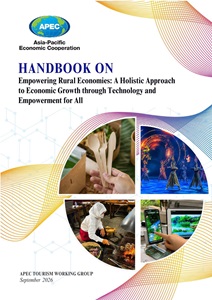
Empowering Rural Economies: A Holistic Approach to Economic Growth through Technology and Empowerment for All