Proceedings
APEC Workshop on Higher Education in Standardization
The Asia-Pacific Economic Cooperation (APEC) is a regional economic forum established in 1989 to leverage the growing interdependence of the Asia-Pacific.
The Asia-Pacific Economic Cooperation (APEC) is a regional economic forum established in 1989 to leverage the growing interdependence of the Asia-Pacific.
APEC ensures that goods, services, investment and people move easily across borders. Members facilitate this trade through faster customs procedures at borders; more favorable business climates behind the border; and aligning regulations and standards across the region.
APEC ensures that goods, services, investment and people move easily across borders. Members facilitate this trade through faster customs procedures at borders; more favorable business climates behind the border; and aligning regulations and standards across the region.
APEC has helped drive economic growth and cooperation across the Asia-Pacific by reducing trade barriers, improving the ease of doing business and strengthening connectivity among economies. These efforts have contributed to rising incomes, expanded trade and greater opportunities for businesses and communities across the region.
APEC has helped drive economic growth and cooperation across the Asia-Pacific by reducing trade barriers, improving the ease of doing business and strengthening connectivity among economies. These efforts have contributed to rising incomes, expanded trade and greater opportunities for businesses and communities across the region.
APEC brings together governments, businesses and stakeholders to collaborate on shared priorities. Explore opportunities to participate in events, contribute to initiatives and engage with APEC’s work across the region.
APEC brings together governments, businesses and stakeholders to collaborate on shared priorities. Explore opportunities to participate in events, contribute to initiatives and engage with APEC’s work across the region.
Manuals
•January 2019
Download Report
8MB
Published Under
SOM Steering Committee on Economic and Technical Cooperation (SCE), Policy Partnership on Women and the Economy (PPWE)
Accessed
5737
Pages
87
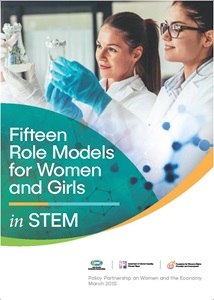
Human resources development in the digital field is a universal matter and vital for economies’ sustainable growth. However, gender gap trends persist as the workforce moves toward new and emerging roles in STEM fields, which continue to outpace the gender gap, causing women to lose out on tomorrow’s best job opportunities.
This handbook focuses on the profiles of women in STEM in the hope that by interviewing exceptional women with different life experiences, readers will appreciate how their self-confidence enabled them to create advantageous environments. Furthermore, their experiences help raise awareness on the lack of emphasis on women’s representation in the STEM fields.
The 15 interviewees in this handbook have applied what they learned and have made an impact. They come from the academia, industry and start-up fields. Some are STEM role models who have undergone extensive life experience. This handbook seeks to achieve three goals: 1) Raise awareness on the lack of women representatives in the Asia-Pacific STEM fields; 2) Provide women in STEM fields role models in different stages of their career development; 3) Understand the unique development pathways within the STEM field, which will be serve as references for capacity building for Women in STEM.