Manuals
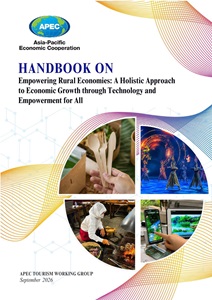
Empowering Rural Economies: A Holistic Approach to Economic Growth through Technology and Empowerment for All
The Asia-Pacific Economic Cooperation (APEC) is a regional economic forum established in 1989 to leverage the growing interdependence of the Asia-Pacific.
The Asia-Pacific Economic Cooperation (APEC) is a regional economic forum established in 1989 to leverage the growing interdependence of the Asia-Pacific.
APEC ensures that goods, services, investment and people move easily across borders. Members facilitate this trade through faster customs procedures at borders; more favorable business climates behind the border; and aligning regulations and standards across the region.
APEC ensures that goods, services, investment and people move easily across borders. Members facilitate this trade through faster customs procedures at borders; more favorable business climates behind the border; and aligning regulations and standards across the region.
APEC has helped drive economic growth and cooperation across the Asia-Pacific by reducing trade barriers, improving the ease of doing business and strengthening connectivity among economies. These efforts have contributed to rising incomes, expanded trade and greater opportunities for businesses and communities across the region.
APEC has helped drive economic growth and cooperation across the Asia-Pacific by reducing trade barriers, improving the ease of doing business and strengthening connectivity among economies. These efforts have contributed to rising incomes, expanded trade and greater opportunities for businesses and communities across the region.
APEC brings together governments, businesses and stakeholders to collaborate on shared priorities. Explore opportunities to participate in events, contribute to initiatives and engage with APEC’s work across the region.
APEC brings together governments, businesses and stakeholders to collaborate on shared priorities. Explore opportunities to participate in events, contribute to initiatives and engage with APEC’s work across the region.
Reports
•December 2022
Download Report
4MB
Published Under
SOM Steering Committee on Economic and Technical Cooperation (SCE)
Accessed
974
Pages
76
Security culture is a set of common beliefs, values and practices that are inherent in an organization’s daily operations. The benefits of security culture to an aviation organization are many, including the reduced risk of security incidents and breaches when employees work in more security-conscious ways. This has both direct and indirect impacts on an airport’s commercial viability and consumer confidence, both locally and regionally.
This project consisted of virtual workshop sessions, project evaluation instruments, such as questionnaires and mid-project and follow-up surveys, and the outreach campaign briefer, culminating in a best practices guidelines to enhance APEC member economies’ security culture policies and programs within the aviation domain.
This project summary documents the project objectives and deliverables, contents of the activities, including course sessions and participating economies and organizations, and summarizes participant feedback, lessons learned, and conclusions and additional considerations.