

Proceedings
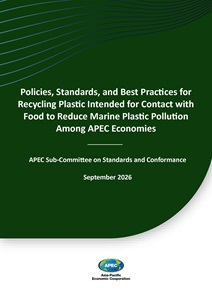
Policies, Standards, and Best Practices for Recycling Plastic Intended for Contact with Food to Reduce Marine Plastic Pollution Among APEC Economies
The Asia-Pacific Economic Cooperation (APEC) is a regional economic forum established in 1989 to leverage the growing interdependence of the Asia-Pacific.
The Asia-Pacific Economic Cooperation (APEC) is a regional economic forum established in 1989 to leverage the growing interdependence of the Asia-Pacific.
APEC ensures that goods, services, investment and people move easily across borders. Members facilitate this trade through faster customs procedures at borders; more favorable business climates behind the border; and aligning regulations and standards across the region.
APEC ensures that goods, services, investment and people move easily across borders. Members facilitate this trade through faster customs procedures at borders; more favorable business climates behind the border; and aligning regulations and standards across the region.
APEC has helped drive economic growth and cooperation across the Asia-Pacific by reducing trade barriers, improving the ease of doing business and strengthening connectivity among economies. These efforts have contributed to rising incomes, expanded trade and greater opportunities for businesses and communities across the region.
APEC has helped drive economic growth and cooperation across the Asia-Pacific by reducing trade barriers, improving the ease of doing business and strengthening connectivity among economies. These efforts have contributed to rising incomes, expanded trade and greater opportunities for businesses and communities across the region.
APEC brings together governments, businesses and stakeholders to collaborate on shared priorities. Explore opportunities to participate in events, contribute to initiatives and engage with APEC’s work across the region.
APEC brings together governments, businesses and stakeholders to collaborate on shared priorities. Explore opportunities to participate in events, contribute to initiatives and engage with APEC’s work across the region.
Manuals
•March 2022
Download Report
4MB
Published Under
SOM Steering Committee on Economic and Technical Cooperation (SCE), Policy Partnership on Women and the Economy (PPWE)
Accessed
1265
Pages
72
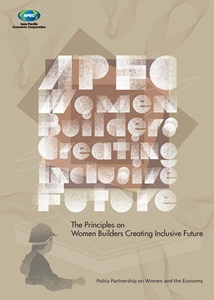
The Principles on Women Builders Creating Inclusive Future seeks to address gender pay gap and segregation within recruitment and promotion processes in non-traditional industries such as the building sector, while creating sustained benefits for all APEC economies promoting women’s participation in higher-wage and high growth sectors.
Findings from literature review, pilot survey, and focus group discussions conducted under the APEC Women Builders Creating Inclusive Future project show that gender stereotypes (in which women are the main child caregivers), lack of transparency in pay, physical strength levels, adaptation to harsh outdoor working conditions, and gender-based violence are major causes for the gender pay gap in the building sector.
This publication presents the four principles formulated for women builders: encouraging women’s participation, establishing gender friendly workplaces, creating healthy and safe workplaces, and ensuring fair career development opportunities. These principles are developed for policymakers to use as guidelines to promote an inclusive future.
Proceedings
Policies, Standards, and Best Practices for Recycling Plastic Intended for Contact with Food to Reduce Marine Plastic Pollution Among APEC Economies
Reports
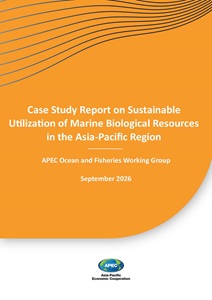
Case Study Report on Sustainable Utilization of Marine Biological Resources in the Asia-Pacific Region
Proceedings
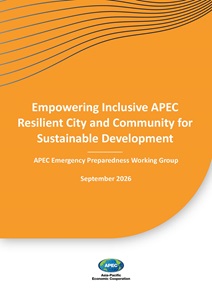
Empowering Inclusive APEC Resilient City and Community for Sustainable Development