

Food Security Takes a Practical Turn
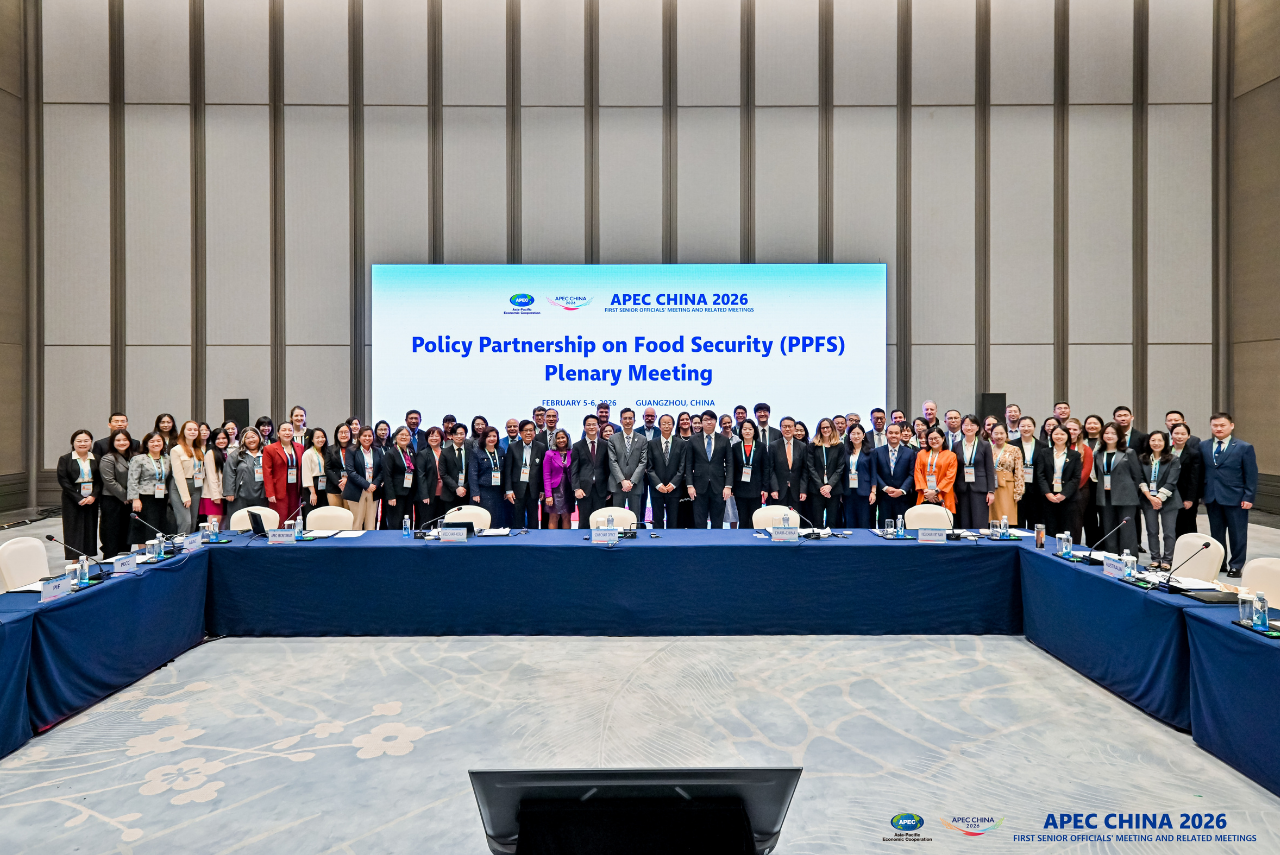
Food security policy across the Asia-Pacific is shifting from high-level commitments toward actions, as APEC economies advance concrete measures to reduce food loss and waste, strengthen supply chains and scale digital innovation in agriculture.
At their meeting in Guangzhou, food security and agricultural officials reviewed progress and examined a range of projects and initiatives aimed at improving resilience across food systems.
“The food security challenges we face are particularly complex, including social, economic and environmental factors,” said Han Jizhi, Chair of the APEC Policy Partnership on Food Security. “Food insecurity is a global threat that must be addressed with urgency.”
A central focus of the meeting was the implementation progress of the Food Security Roadmap Towards 2030, which is guiding APEC economies toward more open, productive, sustainable and resilient food systems.
Economies assessed progress across key action areas, including smallholder resilience, disaster preparedness and recovery efficiency, while identifying gaps requiring accelerated policy attention. A dynamic conclusion table was presented to track economy-level actions and improve comparability of progress.
Delegates also reviewed updates to the Trujillo Principles for Preventing and Reducing Food Loss and Waste, alongside a revised implementation plan aimed at translating voluntary commitments into measurable reductions across supply chains.
Innovation featured prominently in discussions, reflecting its growing role as structural enablers of food security and economic resilience.
“We are at a time of profound global transformation, where science, technology and innovation could deliver breakthroughs to a better and more sustainable future for all,” Han said. “Innovation isn’t just about how it changes our life, it’s about how we make a living.”
Since 2012, the group has supported a number of projects on science, technology and innovation, including initiatives on reducing food loss and waste, smart agriculture and strengthening the resilience of food supply chains.
Nutrition and health outcomes were also a key priority, with economies reaffirming commitments to ensure that food systems deliver not only sufficient supply, but safe, affordable and nutritious food that supports healthy and active lives.
“Our 2030 roadmap highlights that APEC food systems should ensure people always have access to sufficient, safe, affordable and nutritious food to meet dietary needs and food preferences for an active and healthy life,” Han said. “A well-functioning food system is critical to our people’s health and well-being and to the success of our economies.”
Han noted that while economies are making progress in strengthening food supply chains and reviewing the implementation of the Roadmap Towards 2030, addressing food security and nutrition challenges will require sustained effort.
“We know that we will not solve all food security and nutrition issues with one statement or one commitment,” he concluded. “By working together and through constant efforts, we can make real and meaningful change.”