

Proceedings
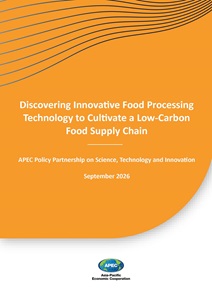
Discovering Innovative Food Processing Technology to Cultivate a Low-Carbon Food Supply Chain
The Asia-Pacific Economic Cooperation (APEC) is a regional economic forum established in 1989 to leverage the growing interdependence of the Asia-Pacific.
The Asia-Pacific Economic Cooperation (APEC) is a regional economic forum established in 1989 to leverage the growing interdependence of the Asia-Pacific.
APEC ensures that goods, services, investment and people move easily across borders. Members facilitate this trade through faster customs procedures at borders; more favorable business climates behind the border; and aligning regulations and standards across the region.
APEC ensures that goods, services, investment and people move easily across borders. Members facilitate this trade through faster customs procedures at borders; more favorable business climates behind the border; and aligning regulations and standards across the region.
APEC has helped drive economic growth and cooperation across the Asia-Pacific by reducing trade barriers, improving the ease of doing business and strengthening connectivity among economies. These efforts have contributed to rising incomes, expanded trade and greater opportunities for businesses and communities across the region.
APEC has helped drive economic growth and cooperation across the Asia-Pacific by reducing trade barriers, improving the ease of doing business and strengthening connectivity among economies. These efforts have contributed to rising incomes, expanded trade and greater opportunities for businesses and communities across the region.
APEC brings together governments, businesses and stakeholders to collaborate on shared priorities. Explore opportunities to participate in events, contribute to initiatives and engage with APEC’s work across the region.
APEC brings together governments, businesses and stakeholders to collaborate on shared priorities. Explore opportunities to participate in events, contribute to initiatives and engage with APEC’s work across the region.
Reports
•February 2025
Download Report
975KB
Published Under
SOM Steering Committee on Economic and Technical Cooperation (SCE), Human Resources Development Working Group (HRDWG)
Accessed
915
Pages
36
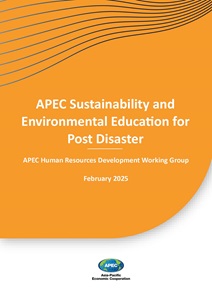
The increasing frequency of natural disasters in APEC economies highlights the urgency of embedding sustainability in environmental management through education. The APEC Sustainability and Environmental Education for Post-Disaster (APEC SEE-PD) project aims to develop undergraduates as agents of planetary health by enhancing their knowledge, skills, and attitudes toward environmental sustainability. This initiative integrates Environmental Education into disaster management strategies via a formal undergraduate curriculum. The methodology involved two components: (1) an online survey to assess a proposed framework and 14-week course, validated by experts, with feedback from 30 respondents shaping curriculum improvements; and (2) a two-day APEC SEE-PD conference with 72 participants from diverse fields offering interdisciplinary insights on curriculum content, delivery, and assessment. Findings underscore the need for an adaptable, region-specific framework incorporating multidisciplinary collaboration with communities and industries. The project underscores the pivotal role of sustainability education in fostering disaster preparedness, resilience, and alignment with Sustainable Development Goals.
Proceedings
Discovering Innovative Food Processing Technology to Cultivate a Low-Carbon Food Supply Chain
Proceedings
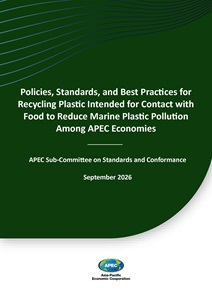
Policies, Standards, and Best Practices for Recycling Plastic Intended for Contact with Food to Reduce Marine Plastic Pollution Among APEC Economies
Reports
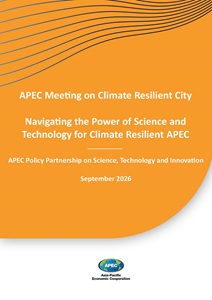
APEC Meeting on Climate Resilient City – Navigating the Power of Science and Technology for Climate Resilient APEC