

Proceedings
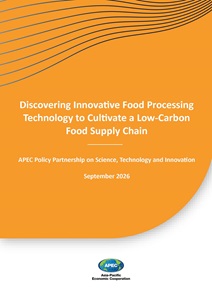
Discovering Innovative Food Processing Technology to Cultivate a Low-Carbon Food Supply Chain
The Asia-Pacific Economic Cooperation (APEC) is a regional economic forum established in 1989 to leverage the growing interdependence of the Asia-Pacific.
The Asia-Pacific Economic Cooperation (APEC) is a regional economic forum established in 1989 to leverage the growing interdependence of the Asia-Pacific.
APEC ensures that goods, services, investment and people move easily across borders. Members facilitate this trade through faster customs procedures at borders; more favorable business climates behind the border; and aligning regulations and standards across the region.
APEC ensures that goods, services, investment and people move easily across borders. Members facilitate this trade through faster customs procedures at borders; more favorable business climates behind the border; and aligning regulations and standards across the region.
APEC has helped drive economic growth and cooperation across the Asia-Pacific by reducing trade barriers, improving the ease of doing business and strengthening connectivity among economies. These efforts have contributed to rising incomes, expanded trade and greater opportunities for businesses and communities across the region.
APEC has helped drive economic growth and cooperation across the Asia-Pacific by reducing trade barriers, improving the ease of doing business and strengthening connectivity among economies. These efforts have contributed to rising incomes, expanded trade and greater opportunities for businesses and communities across the region.
APEC brings together governments, businesses and stakeholders to collaborate on shared priorities. Explore opportunities to participate in events, contribute to initiatives and engage with APEC’s work across the region.
APEC brings together governments, businesses and stakeholders to collaborate on shared priorities. Explore opportunities to participate in events, contribute to initiatives and engage with APEC’s work across the region.
Proceedings
•November 2018
Download Report
4MB
Published Under
SOM Steering Committee on Economic and Technical Cooperation (SCE), Energy Working Group (EWG)
Accessed
3885
Pages
55
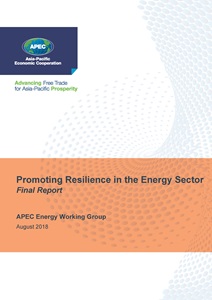
There is an urgent need in the APEC region to enhance the resilience of energy infrastructure to reduce the impact from natural and man-made disasters, and climate change. APEC economies face 70 per cent of all global natural disasters. Energy systems are further stressed by exploding growth and urbanization across the APEC region. This project supported a three-day workshop focusing on capacity-building training on the methodology for evaluating and addressing climate change risks to the power sector, with guidance on Integrated Resource and Resilience Planning, hydropower risk screening, and provided guidance for identifying and evaluating measures for addressing a range of climate risks across power sector components. The workshop was designed to help participants build capacity through presentations and interactive exercises, and share experiences and best practices from power sector practitioners engaged in climate resilient planning. This report describes the workshop proceedings and outcomes
Proceedings
Discovering Innovative Food Processing Technology to Cultivate a Low-Carbon Food Supply Chain
Proceedings
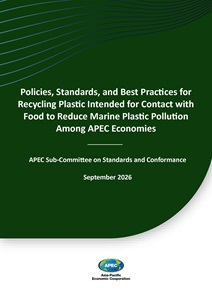
Policies, Standards, and Best Practices for Recycling Plastic Intended for Contact with Food to Reduce Marine Plastic Pollution Among APEC Economies
Reports
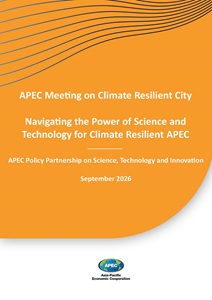
APEC Meeting on Climate Resilient City – Navigating the Power of Science and Technology for Climate Resilient APEC