Proceedings
APEC Workshop on Higher Education in Standardization
The Asia-Pacific Economic Cooperation (APEC) is a regional economic forum established in 1989 to leverage the growing interdependence of the Asia-Pacific.
The Asia-Pacific Economic Cooperation (APEC) is a regional economic forum established in 1989 to leverage the growing interdependence of the Asia-Pacific.
APEC ensures that goods, services, investment and people move easily across borders. Members facilitate this trade through faster customs procedures at borders; more favorable business climates behind the border; and aligning regulations and standards across the region.
APEC ensures that goods, services, investment and people move easily across borders. Members facilitate this trade through faster customs procedures at borders; more favorable business climates behind the border; and aligning regulations and standards across the region.
APEC has helped drive economic growth and cooperation across the Asia-Pacific by reducing trade barriers, improving the ease of doing business and strengthening connectivity among economies. These efforts have contributed to rising incomes, expanded trade and greater opportunities for businesses and communities across the region.
APEC has helped drive economic growth and cooperation across the Asia-Pacific by reducing trade barriers, improving the ease of doing business and strengthening connectivity among economies. These efforts have contributed to rising incomes, expanded trade and greater opportunities for businesses and communities across the region.
APEC brings together governments, businesses and stakeholders to collaborate on shared priorities. Explore opportunities to participate in events, contribute to initiatives and engage with APEC’s work across the region.
APEC brings together governments, businesses and stakeholders to collaborate on shared priorities. Explore opportunities to participate in events, contribute to initiatives and engage with APEC’s work across the region.
Manuals
•April 2026
Download Report
1MB
Published Under
Committee on Trade and Investment (CTI), Chemical Dialogue (CD)
Accessed
859
Pages
20
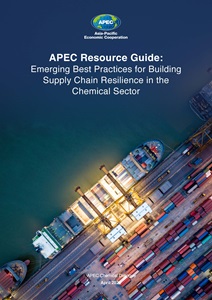
APEC, in addition to other regional and multilateral fora, has a renewed focus on supply chain issues in response to COVID-19 and other economic and environmental factors. Chemicals are critical inputs to most key supply chains. The chemical markets of APEC account 70% of world demand for chemistry, but their relevance and importance is often not well understood, nor is how supply chain initiatives for end products or raw materials can affect APEC chemical production, trade, or investment. This project will map out chemistries that are used in key supply chains (using specific product examples) and the different types of supply chain initiatives that may affect such chemistries. A capacity building workshop will be organized to bring together governments, industry, and other stakeholders to better understand the role of chemicals as part of larger value/supply chains and identify potential trade facilitative measures that can best promote sustainable and resilient supply chains involving chemicals.