

Proceedings
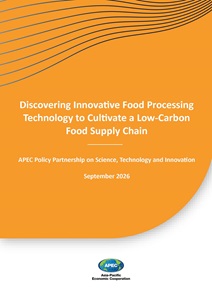
Discovering Innovative Food Processing Technology to Cultivate a Low-Carbon Food Supply Chain
The Asia-Pacific Economic Cooperation (APEC) is a regional economic forum established in 1989 to leverage the growing interdependence of the Asia-Pacific.
The Asia-Pacific Economic Cooperation (APEC) is a regional economic forum established in 1989 to leverage the growing interdependence of the Asia-Pacific.
APEC ensures that goods, services, investment and people move easily across borders. Members facilitate this trade through faster customs procedures at borders; more favorable business climates behind the border; and aligning regulations and standards across the region.
APEC ensures that goods, services, investment and people move easily across borders. Members facilitate this trade through faster customs procedures at borders; more favorable business climates behind the border; and aligning regulations and standards across the region.
APEC has helped drive economic growth and cooperation across the Asia-Pacific by reducing trade barriers, improving the ease of doing business and strengthening connectivity among economies. These efforts have contributed to rising incomes, expanded trade and greater opportunities for businesses and communities across the region.
APEC has helped drive economic growth and cooperation across the Asia-Pacific by reducing trade barriers, improving the ease of doing business and strengthening connectivity among economies. These efforts have contributed to rising incomes, expanded trade and greater opportunities for businesses and communities across the region.
APEC brings together governments, businesses and stakeholders to collaborate on shared priorities. Explore opportunities to participate in events, contribute to initiatives and engage with APEC’s work across the region.
APEC brings together governments, businesses and stakeholders to collaborate on shared priorities. Explore opportunities to participate in events, contribute to initiatives and engage with APEC’s work across the region.
Proceedings
•January 2025
Download Report
897KB
Published Under
SOM Steering Committee on Economic and Technical Cooperation (SCE), Energy Working Group (EWG)
Accessed
2761
Pages
30
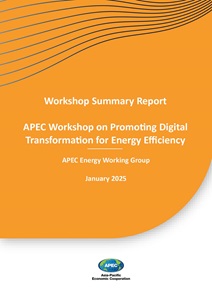
It is estimated that more than 1 billion households and 11 billion smart appliances could participate in interconnected electricity systems by 2040, which would contribute to reducing energy use by 10% by using real-time data to improve operational efficiency, avoiding USD 270 billion of investment in new electricity infrastructure (IEA). In supply, digital transformation significantly affect how energy is produced – “from smart oil fields to interconnected grids, and increasingly, renewable power. Digital technologies could help integrate higher shares of variable renewables into the grid by better matching energy demand to solar and wind supplies. On the other hand, digital transformation also triggers challenges such as new security and privacy risks, disrupting markets, businesses and employment[1]. Besides, there remain difficulties in implementing digital transformation in the interest of energy efficiency since it might bear associated costs, of aggregating all of the potential energy savings from across the economy, which would make investment in energy in general, energy efficiency challenging. The project aims to provide capacity building to APEC member economies’ governments, especially developing ones through sharing information, experiences in addressing challenges, implementing digital transformation in energy sector, in the interest of energy efficiency.
[1] https://www.iea.org/news/digitalization-set-to-transform-global-energy-system-with-profound-implications-for-all-energy-actors
Proceedings
Discovering Innovative Food Processing Technology to Cultivate a Low-Carbon Food Supply Chain
Proceedings
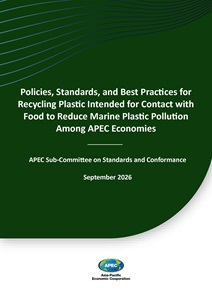
Policies, Standards, and Best Practices for Recycling Plastic Intended for Contact with Food to Reduce Marine Plastic Pollution Among APEC Economies
Reports
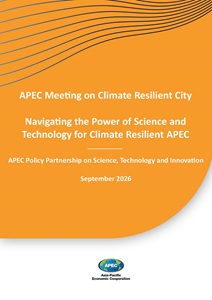
APEC Meeting on Climate Resilient City – Navigating the Power of Science and Technology for Climate Resilient APEC