

APEC Finance Ministers Seek Growth to Navigate Uncertainties
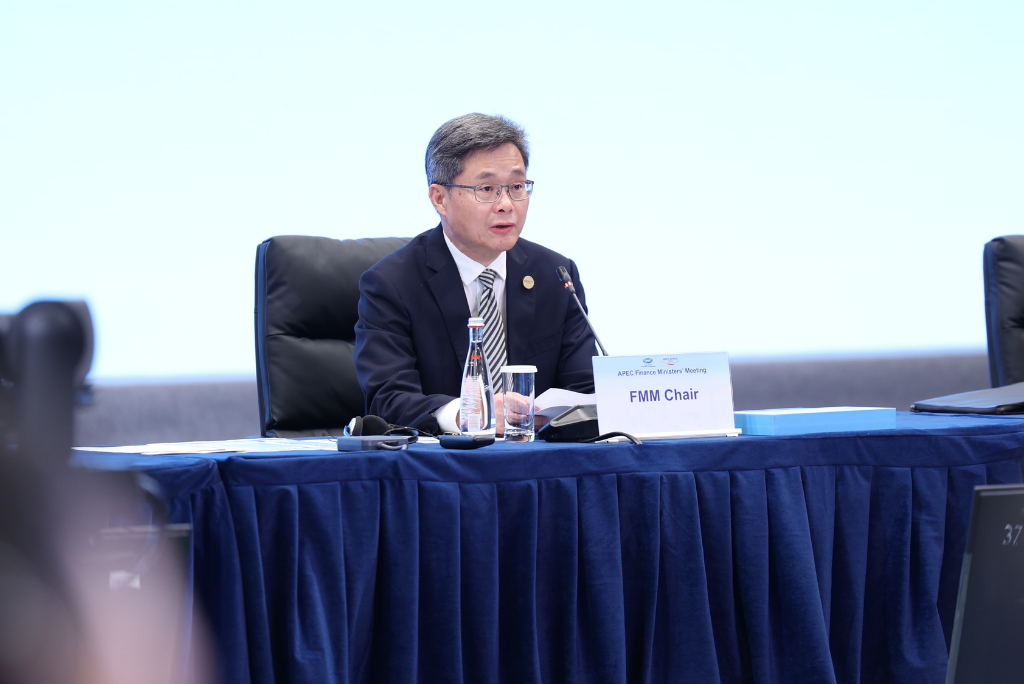
APEC finance ministers focused on sustaining economic growth, strengthening household resilience and financing digital infrastructure as geopolitical tensions, rising debt and technological change reshape the region’s economic outlook.
Meeting in Hong Kong, China, on 20–21 October, ministers examined how to support growth while managing tighter public finances. Their priorities included fiscal policy supporting households, digital infrastructure financing, financial access and opportunity for all, as well as young financial talents dialogue.
“The global economic environment is highly uncertain,” said Lan Fo’an, Minister of Finance of China and Chair of the APEC Finance Ministers’ Meeting in his opening remarks. “Each economy should make its own macroeconomic policies more robust. We should also step up policy communication and coordination to support growth and safeguard economic and financial stability in the APEC region.”
“We should seize the opportunities of the digital and green transitions by driving innovation in artificial intelligence, the digital economy and low-carbon development and building new engines of growth,” Minister Lan added. “Industrial and supply chains must stay stable and unimpeded, and regional economic integration must move forward.”
The International Monetary Fund (IMF) and Asian Development Bank (ADB) presented their assessments of global and regional economic conditions, providing a basis for ministers to examine risks to growth and financial stability.
The IMF warned of mounting risks from geopolitical conflicts, higher energy prices and financial vulnerabilities. While investment in artificial intelligence (AI) is supporting exports, its benefits remain uneven across economies. The IMF stressed the need to rebuild fiscal buffers and accelerate reforms to strengthen productivity and economic resilience. The ADB also emphasized the risks posed by El Niño weather patterns.
Against this backdrop, ministers discussed how fiscal policies can support household consumption and protect vulnerable groups without compromising long-term fiscal sustainability.
With public debt and aging populations placing pressure on government budgets, discussions focused on improving spending efficiency, targeting assistance more effectively and investing in education, health and skills to support productivity and employment.
A World Bank report presented at the meeting examined how fiscal policies can strengthen household resilience while supporting long-term growth. It highlighted the importance of balancing immediate household needs with investment in human capital and sustainable public finances.
Ministers also examined how to attract more investment into digital infrastructure, a growing priority as AI and digital technologies transform businesses and industries across the region.
Discussions focused on improving investment conditions, expanding financing options and strengthening cooperation among governments, private investors and multilateral development banks. Ministers exchanged experiences on addressing financing barriers and developing projects capable of attracting long-term capital.
Closing the digital infrastructure gap is critical to ensuring businesses and communities can participate in the digital economy. Uneven access to connectivity and financing risks widening productivity gaps and limiting the benefits of technological advances.
Expanding financial access was another focus, particularly for small businesses, rural communities and households that remain underserved by traditional financial institutions.
Ministers shared policies and practices to make financial services more accessible, affordable and responsive to users’ needs. Discussions also examined how digital innovation can reduce transaction costs and expand financial services while maintaining consumer protection and financial stability.
Eduardo Pedrosa, Executive Director of the APEC Secretariat, emphasized the importance of translating financial cooperation and technological progress into tangible economic benefits.
“AI is creating new engines of growth, but the benefits won’t spread on their own,” Pedrosa said. “Economies need the infrastructure, financing and skills to turn technological progress into stronger businesses, better jobs and greater economic security for households.”
The APEC Policy Support Unit (PSU) presented findings from 54 policy initiatives submitted by 18 member economies. The initiatives ranged from digital payment systems and simplified bank accounts to credit guarantees and alternative banking services for remote communities.
The PSU’s findings highlighted that access alone does not guarantee financial inclusion. High service costs, limited financial literacy and difficulties using financial services continue to prevent households and businesses from fully participating in the financial system.
Ministers also reviewed the APEC Young Financial Talents Dialogue, which brought together 33 young professionals from 18 economies in August. The program focused on strengthening financial expertise and knowledge sharing on digital innovation and economic development.
The discussions build on the Incheon Plan (2026–2030), which guides regional financial cooperation on resilience, innovation and sustainable growth.
For further details and media inquiries, please contact:
media@apec.org