

Officials Sharpen Tools to Tackle Corruption Laundered Through Crypto
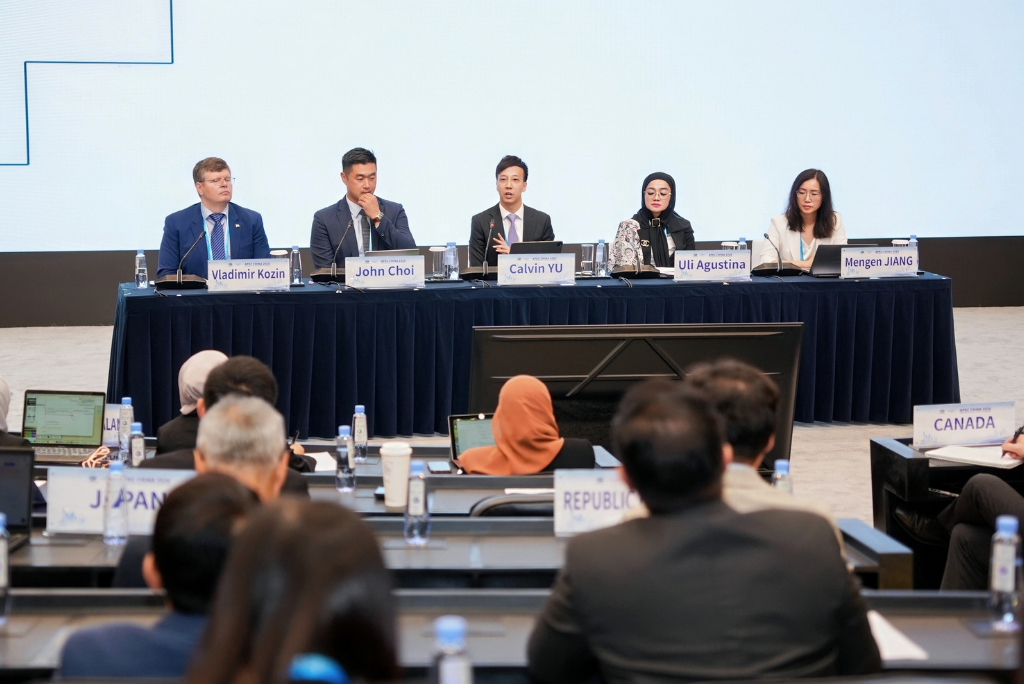
As scam compounds generate billions of dollars through fraudulent cryptocurrency schemes across the Asia-Pacific last year, APEC's Anti-Corruption and Transparency Working Group called for a timely workshop focused on tackling crypto money laundering.
Anti-corruption officials, financial regulatory experts and international law enforcement organizations from across the region convened in Dalian last week to find practical ways to trace, freeze and seize corrupt crypto assets before they become unrecoverable.
Cryptocurrency has become an increasingly attractive tool for corrupt officials, criminals and bribery players with its ability to transfer across borders within seconds and its veil of anonymity.
"This problem is bringing unprecedented challenges to asset recovery, financial supervision and cross-border anti-corruption cooperation across the region," said Chen Long, Chair of the APEC Anti-Corruption and Transparency Working Group, opening the discussion.
"Corruption is not a static crime, it adapts to new tools and technologies and today that tool is increasingly becoming cryptocurrency. Our joint task is to make sure enforcement adapts just as fast,” he added.
Beyond coordination, anti-corruption investigators also highlighted the importance of big data and blockchain technology to identify and flag abnormal capital flows and backtrace transactions to its root address.
The workshop explored early detection methods such as requiring every crypto transaction to be checked against the identities of both sender and recipient before funds are moved. The United Nations Office on Drugs and Crime further pointed to the importance of having virtual asset service providers build internal monitoring systems within their platforms. Such systems can assist with early warning and detect transactions law enforcement may miss.
Tracing does not always translate into recovery. Only 3.8 percent of the USD1.5 billion stolen in the Bybit theft, one of the largest crypto thefts on record, has ever been recovered. Research shown throughout the workshop showed how 80 percent of jurisdictions rate only low to moderate on their ability to recover stolen crypto assets.
Interpol emphasized that tracing illicit crypto assets and recovering them call for entirely different technology, expertise and legal frameworks. In response, experts discussed the development of capabilities and specialized taskforces for seizing and returning virtual assets to victims.
As formal investigation requests can take months and can be slow in keeping up with crypto's speed, economies stressed the value of real-time, informal information sharing between networks across jurisdictions instead. Anti-corruption practitioners called for strengthening and developing these networks further to ensure faster joint responses to crypto-enabled crime.
"To prevent and combat corruption, joint and coordinated efforts from all sides is required. We need to uphold zero tolerance on corruption and continuously research new criminal methods together, improve coordinated mechanisms and share technologies and expertise," the Chair concluded.
The workshop forms part of the Anti-Corruption and Transparency Working Group's continued efforts to safeguard the integrity of the Asia-Pacific's financial systems and strengthen public trust in them.
For further details and media inquiries, please contact: