

APEC, UNCTAD Bridge Regional and Global Efforts on Digital Services Trade at WTO Forum
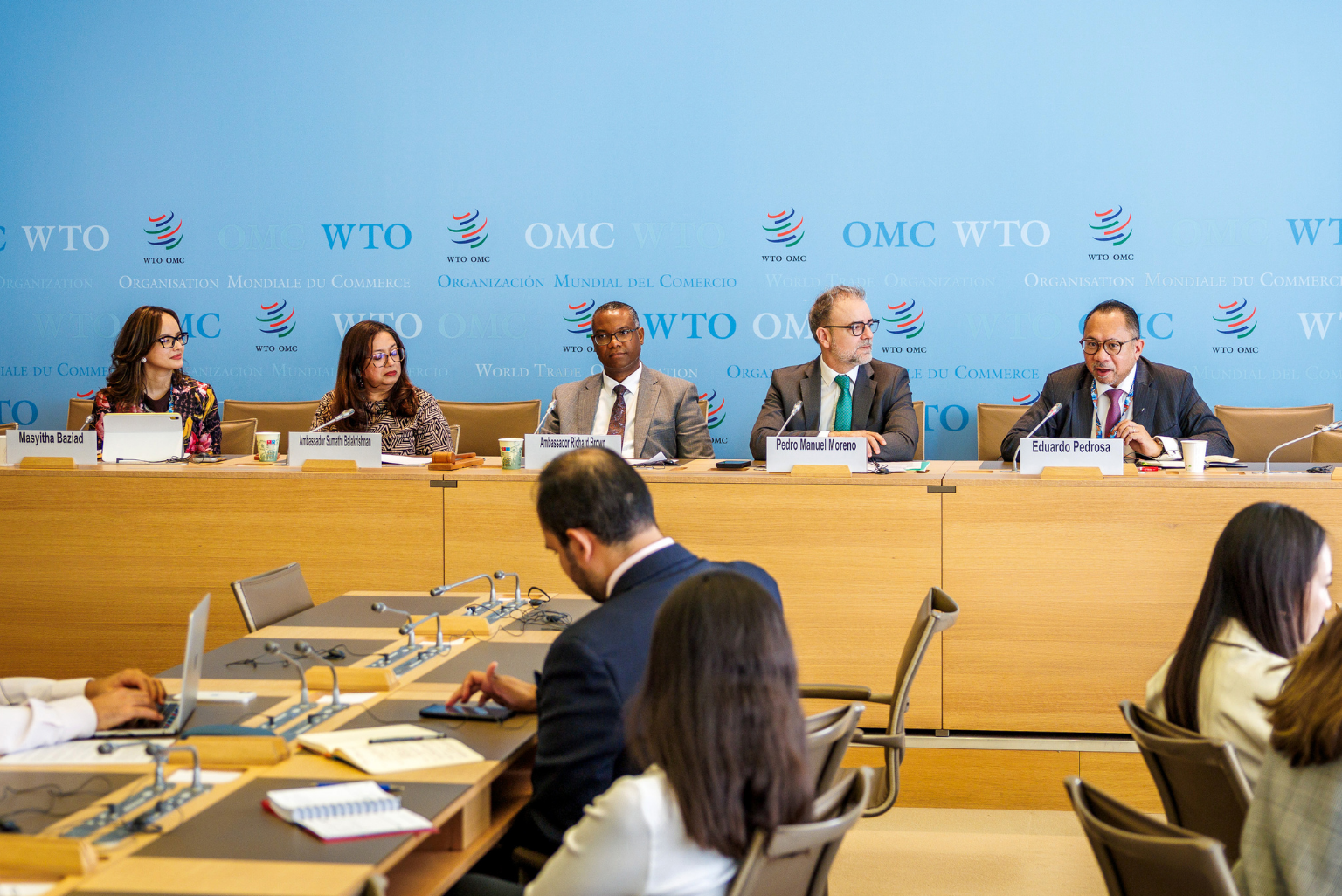
Economies need better regulation, stronger digital infrastructure and closer regional cooperation to ensure more businesses and people can benefit from the rapid growth of digitally delivered services, APEC and trade officials said at the WTO Public Forum last week in Geneva.
The discussion, jointly organized by the APEC Secretariat and UN Trade and Development (UNCTAD), marked the first time APEC has hosted a session at the WTO Public Forum. It brought regional and multilateral perspectives together to examine how economies can translate the growth of digital services into wider participation in global trade.
“Regulate for outcomes. What is it that the regulation seeks to achieve? That’s the prism through which we should be seeing this,” said APEC Secretariat Executive Director Eduardo Pedrosa.
Pedrosa said economies need reliable digital infrastructure alongside transparent, predictable regulatory processes that can adapt as technology and business models change. Building trust is equally important as businesses increasingly depend on cross-border data, digital payments and platforms to reach customers.
He pointed to APEC’s role as a forum where economies can test approaches, exchange experience and bring practical lessons into wider international discussions.
“In our context, what we try to do in APEC is to bring these different case studies together,” Pedrosa said. “It’s a two-way street, but we clearly have a lot of work ahead of us.”
APEC trade ministers in May welcomed a new roadmap to guide the region’s services work over the next decade, covering digital transformation, regulatory reform, workforce readiness, services data and capacity building. It also encourages pathfinder approaches and cooperation with regional and international organizations, including support for services work at the WTO.
Also read: APEC Trade Ministers Issue Joint Statement
UNCTAD Acting Secretary-General Pedro Manuel Moreno said the expansion of services presents significant opportunities, but developing economies are not benefiting equally.
“The transformation is real, the opportunity is large, but the divide is widening,” Moreno said.
Digitally deliverable services now account for 56 percent of global services exports, according to UNCTAD's recent data, compared with 61 percent in developed economies and just 16 percent in least developed countries. Services also account for 71 percent of intermediate inputs globally, illustrating their growing role across manufacturing and other sectors.
Moreno said digital participation depends on more than connectivity, pointing to skills, finance, cross-border payments, data and the ability of economies to implement policy. He also cautioned that overlapping digital trade rules can be difficult for smaller economies to navigate.
Malaysia’s Permanent Representative to the WTO, Ambassador Sumathi Balakrishnan, said governments face the challenge of creating safeguards without making regulation unnecessarily burdensome for businesses.
“The important part is to create that flexibility and that predictability for business,” Balakrishnan said, highlighting Malaysia’s work on good regulatory practices, cybersecurity, data protection and digital governance.
Jamaica’s Permanent Representative to the United Nations and other international organizations in Geneva, Ambassador Richard Brown, said digitalization is opening new opportunities for smaller economies to overcome traditional constraints such as distance and market size, but domestic capacity remains critical.
“International cooperation should be judged by its ability to strengthen policy implementation, productive capacity building, and participation in digital trade for developing countries, especially the smallest and most vulnerable among them,” Brown said.
The panel, Policy to Practice, Building Digital-Ready Services Economies, was held on the margins of the WTO Public Forum 2026.
For further details and media inquiries, please contact:
media@apec.org