

Senior Officials Advance Trade, Connectivity, Innovation and Development Agenda
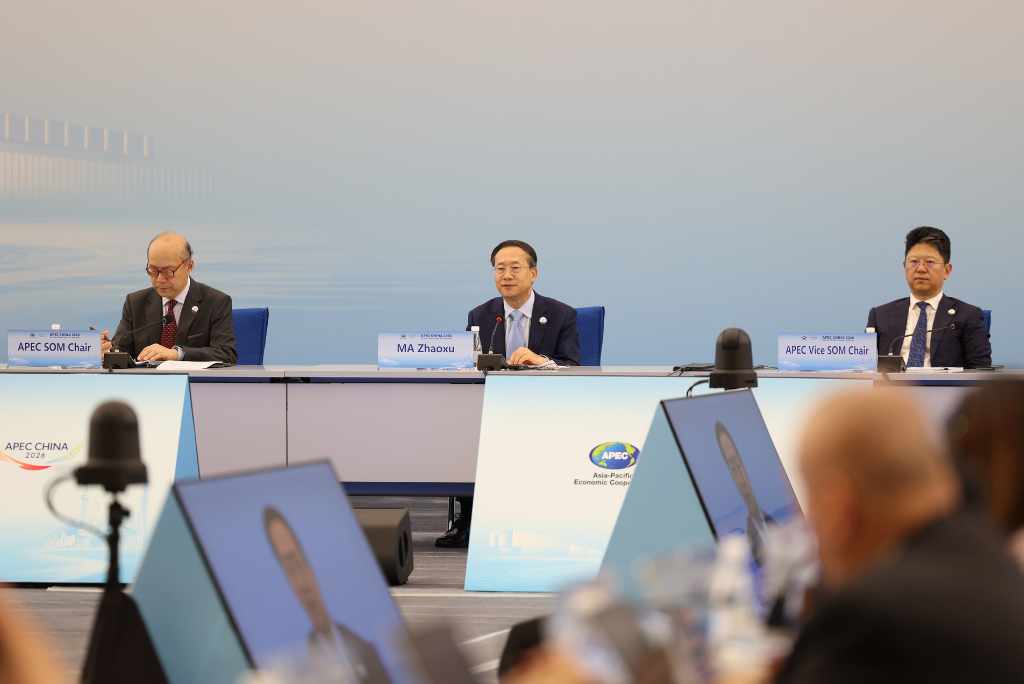
Senior officials from APEC economies convened for their second meeting of the year in Shanghai against a backdrop of growing global economic uncertainty, with discussions focused on openness, innovation and cooperation as the region seeks to sustain growth and deepen regional integration.
Opening the Second APEC Senior Officials’ Meeting, China’s Deputy Foreign Minister Ma Zhaoxu said APEC economies must continue working together to get prepared for a successful APEC Economic Leaders’ Meeting and contribute to the building of an Asia-Pacific community.
“We live in a world with change and turbulence, rising unilateralism and protectionism, spillovers from geopolitical conflicts, and worsening energy and food crises have cast a shadow on the global economy's prospects,” said Deputy Minister Ma.
“Yet defying these external risks and challenges, the Asia-Pacific has maintained the momentum of relatively fast development, and its role as the growth engine of the world is even more prominent,” he added.
Deputy Minister Ma framed trade, connectivity, innovation and development as mutually reinforcing pillars to advance discussions across these areas ahead of the APEC Economic Leaders’ Meeting later this year.
On trade, Deputy Minister Ma called for “active exploration of the pathway toward the Free Trade Area of the Asia-Pacific (FTAAP),” describing it as a shared APEC vision for advancing economic integration in the region complimented by flexible and pragmatic cooperation.
He added that China is working toward outcomes on FTAAP as well as trade digitization, cooperation in the service sector, and the list of environmental goods. He also expressed hope for deeper discussions ahead of the Ministers Responsible for Trade Meeting in Suzhou later this week.
Deputy Minister Ma underscored the importance of connectivity as a foundation for economic integration in the region, calling on economies to work toward an upgraded APEC Connectivity Blueprint to support more interconnected development across the Asia-Pacific.
“We are also advancing initiatives in areas such as smart customs, smart transportation, tourism facilitation and the APEC Business Travel Card to further strengthen physical, institutional and people-to-people connectivity across the region.”
Digital transformation and artificial intelligence were also featured prominently throughout the meeting as economies explored how emerging technologies are reshaping industries, trade and labor markets.
“With the extensive application of artificial intelligence and other emerging technologies, innovation is playing an even more prominent role in driving economic growth,” Ma said. “We should build on existing cooperation and develop a roadmap for innovation-driven growth through artificial intelligence and the digital economy.”
He also stressed that APEC cooperation must continue delivering tangible benefits for people across the region through practical cooperation and expected several deliverables in areas including energy security, food resilience, small and medium-sized enterprises, health, ageing, anti-corruption and human resources development.
“We should prioritize economic development and better lives for the people, increase the sense of gain of businesses and ordinary people, and gain broader public support for an Asia-Pacific community,” Deputy Minister Ma noted.
APEC 2026 Senior Officials’ Meeting Chair Ambassador Chen Xu said the Shanghai meeting represents a key opportunity for economies to advance discussions and build momentum toward outcomes later this year.
“This meeting is both for reviewing previous work and preparing for the next steps,” Ambassador Chen said. “We will refine deliverables, build consensus and prepare substantive outcomes for ministers and leaders in the second half of the year.”
For further details and media inquiries, please contact:
media@apec.org