

Shenzhen, People's Republic of China
•19 November 2026
2026 APEC Ministerial Meeting
Joint Ministerial Statement
37th APEC Ministerial Meeting 2026
Shenzhen, People’s Republic of China
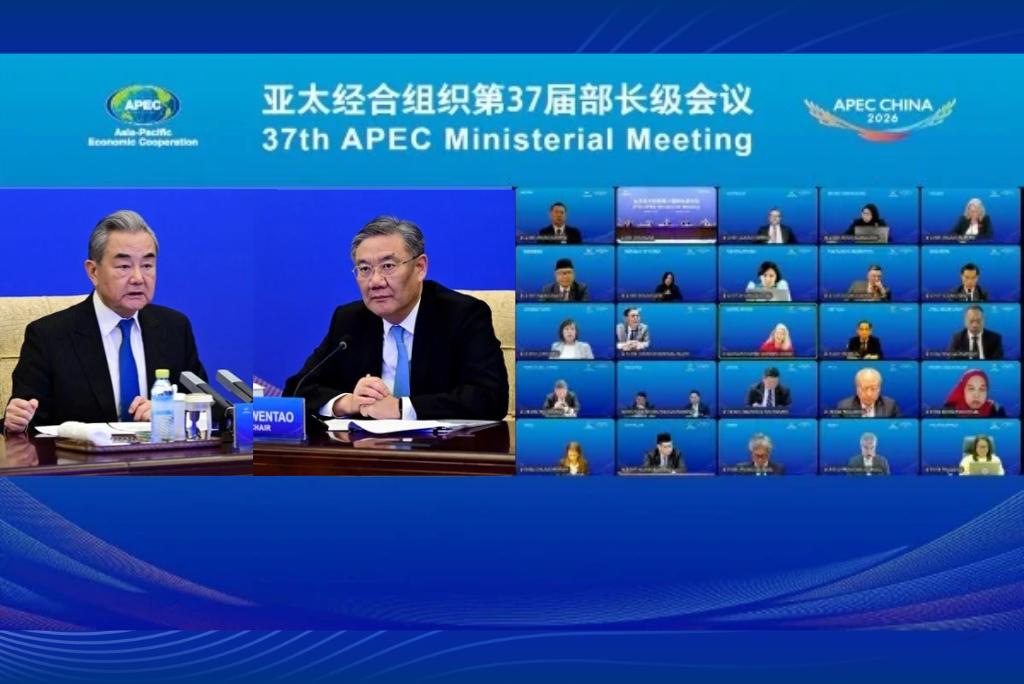
1. We, the APEC Ministers, met virtually on November 3, 2026, chaired by H.E. Mr. Wang Yi, Minister of Foreign Affairs of the People’s Republic of China and H.E. Mr. Wang Wentao, Minister of Commerce of the People’s Republic of China. We welcomed the participation of the APEC Business Advisory Council (ABAC), the Association of Southeast Asian Nations (ASEAN), the Pacific Economic Cooperation Council (PECC) and the Pacific Islands Forum (PIF).
2. We advanced our shared objectives toward realizing an open, dynamic, resilient, and peaceful Asia-Pacific community, guided by the Putrajaya Vision 2040. Under the APEC 2026 theme of “Building an Asia-Pacific Community to Prosper Together”, we have advanced APEC’s work this year through China’s APEC 2026 priorities: “Openness, Innovation, Cooperation”. We remain committed to APEC as the premier forum for regional economic cooperation and emphasize the importance of its role in bringing us together to explore new opportunities and address economic challenges and create a more resilient and prosperous Asia-Pacific region for all our people.
Trade and Investment
3. While rapid technological development and industrial transformation are emerging as important engines of economic growth, global trade continues to face significant challenges. We acknowledge the importance of fostering an environment for trade and investment that promotes resilience. Against this backdrop, we remain committed to APEC as the premier forum for regional economic cooperation and emphasize the importance of its role in bringing us together to address economic challenges and create a more resilient and prosperous Asia-Pacific region for all.
4. We reaffirm our shared commitment to advancing economic integration in the Asia-Pacific region in a manner that is market-driven, including through the work on the Free Trade Area of the Asia-Pacific (FTAAP) agenda. APEC can play a role in building economies’ capacity to participate in high standard and comprehensive regional undertakings. To this end, we welcome dialogues and other efforts this year which fostered information sharing on modern topics in trade agreements. We recognize more work remains, particularly given the evolving nature of trade and trade agreements, and welcome the Statement on the Free Trade Area of the Asia-Pacific (FTAAP) agenda (Annex A). We welcome new areas of cooperation under the FTAAP agenda, including on trade and labour and state-owned enterprises (SOEs), and look forward to continued cooperation that embraces APEC’s role as an incubator of ideas. We will continue working together to enhance capacity building and technical cooperation among members, including through the Capacity Building Needs Initiative (CBNI).
5. We acknowledge the agreed upon rules in the WTO are key to facilitating global trade. The impasse at the 14th WTO Ministerial Conference (MC14) again underscored that the WTO has challenges and needs meaningful reform to improve all its functions, and to be more relevant and responsive to the interest of its Members. We encourage Members to work together to improve the WTO. Further, we welcome efforts to deepen discussions on addressing those challenges including contemporary trade issues, and intend to work collaboratively, through APEC’s role as an incubator of ideas, to support Members’ deliberations at the WTO.
6. We welcome the acceptance by 18 APEC economies of the WTO Agreement on Fisheries Subsidies and call on the remaining economies to complete their domestic procedures, and encourage all WTO Members to conclude negotiations on additional disciplines as soon as possible. We recognize the need for constructive engagement on agriculture at the WTO. We support a moratorium on customs duties on electronic transmissions which helps keep digital markets open and predictable, and note the efforts by some economies to reach an agreement for a permanent moratorium of customs duties on electronic transmissions.
7. We recognize the positive role of plurilateral negotiations at the WTO, including the Joint Statement Initiatives (JSIs) in advancing issues of interest to Members, and in addressing contemporary trade issues, fostering new ideas, facilitating economic growth, and building momentum toward multilateral outcomes. We note the efforts of participating Members of the WTO JSIs to incorporate the Investment Facilitation for Development (IFD) Agreement and WTO Agreement on Electronic Commerce (ECA) into the WTO legal framework. We also note the efforts by economies that participate in and implement the JSI on Services Domestic Regulation.
8. We note the benefits of digitalization to enhance and facilitate trade. APEC economies endeavoring to digitalize, through the adoption of new technologies, a customs or trade-related procedure necessary for the cross-border movement of goods, are encouraged to take account of voluntary recommendations endorsed by APEC bodies, including the Policy Principles for Government Decision-Making on Digitalization of Customs Procedures, to ensure that their efforts towards trade digitalization are deliberate, cost-effective, and recognize the value of commercial data. APEC economies acknowledge the collective contributions of customs administrations in the APEC region to trade security and facilitation through technological application and innovative solutions, and their role in strengthening supply chain resilience. We also welcome the contributions of the Third Phase of Supply Chain Connectivity Framework Action Plan (SCFAP III, 2022-2026) to address supply chain chokepoints in the region, especially in promoting digital transformation of trade procedures and the transition towards paperless trade, and welcome the completion of the final review of SCFAP III.
9. We reaffirm our commitment to facilitating paperless trade in the region, including through the cross-border recognition of electronic trade-related documents, such as electronic bills of lading and electronic invoices, and through related capacity building efforts. We encourage APEC economies to work towards aligning our legal frameworks with the principles of the UNCITRAL Model Law on Electronic Transferable Records (MLETR), noting the different levels of readiness and capacity, and other relevant international conventions on the use of electronic signatures and electronic authentication.We encourage further engagement between the public and private sectors to advance paperless trade in the region, including through the APEC Centre of Excellence for Paperless Trade (ACCEPT).
10. We recognize that building a stronger and more innovative services sectors requires continuous policy innovation and reform. In this regard, we welcome the APEC Roadmap for Innovative, Competitive and Resilient Services, which will guide the next decade’s work on services in APEC, and look forward to the finalization of its implementation plan. We reiterate the importance of substantive reforms and cooperative initiatives to achieve an open and predictable environment for innovative, competitive and resilient services sectors. To further advance this objective, we support continued work by participating members on the APEC Services Index to identify barriers to services trade by integrating digital trade into the APEC Services Index. We support work to reduce unnecessary barriers and facilitate digitally delivered services. We support continued work on environmental services, and recognize APEC’s work to foster cooperation in advancing resilient business models. We reiterate the importance of advancing cross-fora collaboration and engagement with the private sector. We support continued work on developing principles for technical standards development for services.
11. We are committed to strengthening the protection and enforcement of intellectual property rights, including through continued efforts to address challenges posed by online piracy, counterfeit goods, and misappropriation of trade secrets.
12. We encourage efforts to strengthen cooperation on standards and conformity assessment procedures to reduce unnecessary technical barriers to trade across APEC economies. We reaffirm the value of implementing good regulatory practices (GRPs) to foster transparency, predictability and efficiency in the regulatory environment in the APEC region, including by drawing on the GRP Blueprint as a useful guide. We encourage deepened exchange and cooperation on technical standards in sectors of mutual interest. We encourage business mobility through the APEC Business Travel Card.
13. We affirm that connectivity has served as a conduit for economic growth, facilitating the flow of goods, services, capital, and people, including as supported by safe and resilient transport links. We appreciate the efforts made by APEC to advance regional connectivity over the past decade. Building on this progress, we encourage economies to continue efforts towards achieving a seamlessly and comprehensively connected and integrated Asia-Pacific, by further strengthening the three pillars: physical, institutional, and people-to-people. We will continue to advance connectivity to deliver tangible benefits for all. We will enhance cooperation on quality infrastructure development and investment. We also underscore the importance of investment, including through ex-ante investment in disaster risk reduction.
14. We underscore the critical role that transportation plays in economic growth by facilitating the movement of goods and people, and the vital function of international transport links in regional connectivity. We further emphasize that infrastructure and the use of modern technology in the transport sector contribute to the viability and integrity of supply chains globally for passengers and cargo, through air and maritime links, waterway, highway and rail networks, and intermodal transportation. We encourage economies to accelerate the modernization, upgrading and digital transformation of transport infrastructure and cooperation on secure digital solutions in transportation, to improve transportation safety, efficiency, accessibility, and resilience. We recognize the increasing role of digital and emerging technologies in transportation, and encourage member economies to accelerate innovation in a secure manner, including in autonomous transportation, and to unlock technology’s benefits for the transport sector.
Innovation
15. Innovation is one of the defining drivers of long-term economic growth and transformation across sectors empowering all our people and businesses to participate and lead in a rapidly evolving and digitalized global economy. We will work to foster an enabling environment for innovation and adoption of new and emerging technologies, to accelerate digital transformation and enhance productivity, efficiency, resilience, competitiveness and dynamism of the Asia-Pacific region.
16. We reaffirm our commitment to broadening and enhancing digital connectivity across regions, between urban and rural areas, and among all segments of our societies. We encourage member economies to explore cooperation in digital connectivity infrastructure through information exchange and capacity building, with a particular focus on improving the accessibility and quality of networks.
17. We recognize that digital literacy is essential for participation in the digital economy and society. We encourage economies to enhance digital literacy and skills to support access, understanding and utilization of digital and emerging technologies. We encourage economies to, where appropriate, advance efforts to enable micro, small and medium enterprises (MSMEs), to access and leverage essential digital tools through enhanced digital literacy and capacity building.
18. We recognize the opportunities for member economies to support innovation and the broad adoption of digital and emerging technologies, including in manufacturing, agriculture, energy, transport, logistics and services, to promote innovative economic growth. By applying innovations, digital and emerging technologies, APEC economies can improve decision-making, connectivity and responsiveness across agri-food systems. We also encourage deployment and scaled digital and emerging technologies application across public services, in the areas of education, healthcare, transportation, disaster and emergency management, public administration, and human resources development, among others, to fully unlock these technologies’ benefits.
19. We recognize that digital and emerging technologies development and energy modernization are increasingly intertwined and mutually dependent. We encourage member economies to deepen voluntary cooperation on the mutual enhancement between digital and emerging technologies, and energy.
20. We reaffirm our commitment to growing the digital economy and sharing the benefits of digital transformation with all our peoples. We encourage economies to address potential risks such as data breaches, online scams and deliberate misuse of digital and emerging technologies for malicious purposes, to strengthen and enhance the digital environment. We recognize the importance of respecting intellectual property rights in the development of digital and emerging technologies. We recognize the vital role of data in powering digital transformation. We will continue our cooperation on facilitating the flow of data across borders, strengthening business and consumer trust in digital transactions, and ensuring data protection and privacy.
21. We emphasize the importance of structural reform for innovation-driven economic growth, underpinned by the Strengthened and Enhanced APEC Agenda for Structural Reform (SEAASR) (2026-2030). We look forward to the publication of the 2026 APEC Economic Policy Report (AEPR) on Structural Reform and AI-Driven Digital Transformation.
Cooperation
22. We emphasize the importance of credible and flexible fiscal, monetary and financial policy frameworks to manage shocks and maintain macroeconomic and financial stability, and the need for structural reforms to address medium-term vulnerabilities. We note that global imbalances have persisted, creating risks to growth and stability. We recognize that global rebalancing is in our common interest and agree to strengthen communication and cooperation in this regard. We appreciate the discussions under the Finance Ministers’ Process on fiscal policies supporting households and improving people’s livelihoods, and facilitating communication across the region. We acknowledge the efforts of member economies to advance approaches to financial access and opportunities for all to strengthen economic resilience and advance the financial well-being of our populations.
23. We are committed to strengthening energy security, elevating living standards, improving productivity, encouraging innovation, and delivering shared benefits for all including by promoting access to stable, affordable, modern, and reliable energy supplies and technologies. We encourage strengthened energy security through cooperation on supply chain resilience, secure cross-border infrastructure interconnection, and risk assessment. We recognize the benefits of timely restoration of critical energy infrastructure such as power plants, electric grids, submarine power cables and pipelines, and encourage sharing of economies’ experiences on market mechanisms, emergency preparedness and response, and strategic reserve management. We recognize the importance of secure and uninterrupted energy flows and cooperation across the whole supply chain including between producers and consumers in a mutually beneficial manner as well as fostering energy cooperation in the region. We will promote universal access to high-quality energy that is secure, reliable, abundant, resilient, and affordable, including for remote and rural areas. We recognize that each economy will choose an energy system mix consistent with its domestic priorities.
24. We recognize the need to continue advancing cooperation in food security to achieve stronger resilience of agri-food systems. To this end, we encourage member economies to accelerate innovation-led transformation of, and increase investment in, agri-food systems and preventing and reducing food loss and waste (FLW). We encourage member economies to adopt, as appropriate, innovative technologies and improved management practices to strengthen food security, prevent and reduce FLW, promote higher quality food and nutrition, increase productivity and efficiency, and build resilience. We reaffirm our commitment to strengthening economic opportunities in rural areas.
25. We recognize the multiple values, services and contributions that forests, forest products, and mangroves provide to economic growth and people’s well-being. We recognize that illegal logging and associated trade (ILAT) remain significant challenges that undermine legal trade in forest products across all member economies in the APEC region. We seek to strengthen efforts to combat illegal logging and associated trade, promote trade in legally harvested forest products and Sustainable Forest Management (SFM) including forest restoration and conservation.
26. We recognize the importance of sustainably-managed and resilient marine ecosystems for advancing economic growth, supporting food security, and improving livelihoods. We encourage collective efforts in combating illegal, unreported, and unregulated (IUU) fishing, and preventing and reducing marine debris, and we welcome opportunities to address ocean-related challenges, including through innovative partnerships and utilizing emerging technologies. We also encourage cooperation on sustainable fisheries and aquaculture as important contributions to food security, nutrition, and livelihoods in the Asia-Pacific region.
27. We recognize economic empowerment as an important way to boost productivity and innovation. We will continue to work to expand economic opportunities for all. We support women’s entrepreneurship as well as their participation and leadership in trade and global value chains, which are enhanced by access to capital, assets, markets, and skills training.
28. We reaffirm the vital role of the tourism sector in promoting economic growth and regional prosperity. We recognize the importance of digital platforms in accelerating tourism development and acknowledge that digital emerging technologies can improve the efficiency, capacity, productivity and quality of the tourism sector, from product development and marketing to service delivery. We emphasize the importance of enhancing the professional skills of tourism practitioners and cultivate tourism talent to adapt to the digital era. We encourage economies to pursue policies that promote economically sustainable tourism practices, conserve biodiversity, enhance resource efficiency, and encourage investment in resilient and secure tourism infrastructure.
29. MSMEs are an important foundation of our economies and a key force in promoting employment, stimulating innovation, contributing to trade, improving supply chain resilience, and driving economic growth. We seek to work together to empower Asia-Pacific MSMEs to enhance their innovation, capabilities, and expertise to achieve greater resilience. We further encourage simplifying, reducing or eliminating unnecessary regulatory and compliance burdens on MSMEs. We encourage the development of easy-to-use and efficient digital solutions to support MSMEs across the Asia-Pacific, and encourage economies to continue strengthening support for MSMEs, to help them enhance efficiency, productivity, resilience and participation in global value chains. We also encourage collaboration among governments, enterprises, financial institutions, start-ups, research institutions, and other stakeholders, facilitating policy exchange, financing, innovation, and talent development to advance MSME growth across the Asia-Pacific. We welcome efforts to foster MSME advancement, including facilitating the transition of economic actors from the informal to the formal and global economies.
30. We highlight the serious threat posed by corruption, including cross-border flow of the proceeds of crime derived from corruption. We will continue to prioritize the effective implementation of the measures outlined in the United Nations Convention against Corruption (UNCAC) by relevant member economies. We recognize the positive role of fighting corruption in safeguarding economic growth and prosperity, and will continue to work together to prevent and fight corruption and ensure transparency. We reaffirm our commitment to denying safe haven to corruption offenders including people who benefit from corruption and illicit assets, in accordance with domestic laws. We take note of the role of multi-stakeholder engagement in preventing and combating corruption, such as domestic and foreign bribery, including through APEC Network of Anti-Corruption Authorities and Law Enforcement Agencies (ACT-NET). We will continue to explore the utilization of digital technologies to counter new challenges in cross-border corruption crimes. We will also address the role corruption plays in facilitating other crimes, including organized crime.
31. We recognize that developing human resources is important for economic growth, and digital and emerging technologies and other emerging technologies are reshaping production and employment patterns. We support integrating digital and technical skills to ensure workers are prepared for in-demand jobs. We emphasize the importance of responding proactively to emerging developments in the labor market and supporting our workers in navigating the digital and emerging technologies transitions, seizing new human resources development opportunities, and supporting all people including persons with disabilities in accessing employment and vocational training opportunities, and reskilling, upskilling and lifelong learning. We endeavor to strengthen human resources development by promoting high-quality, full, productive, and decent employment, investing in people, facilitating skills development, protecting the rights of workers and continuing efforts to promote international labour standards in the changing world of work and strengthening and optimizing social security systems for efficiency, adaptability, and accountability as appropriate. We support the continuous implementation of the APEC Collaborative Framework for Demographic Changes (2026-2030) through cross-fora collaboration.
32. We reaffirm that younger generations are the key drivers of future prosperity and innovation and acknowledge the importance of strengthening human resources development by providing them with opportunities for development and the tools to actively shape their futures, and we welcome efforts in this regard.
Strengthening APEC as an institution
33. We remain committed to APEC’s mission and its voluntary, non-binding and consensus-building principles. We reaffirm our commitment to strengthening APEC as the premier forum for regional economic cooperation and support for APEC’s continuous improvement to ensure that its governance and structures are responsive to the changing economic landscape. We are committed to making the APEC Secretariat and APEC’s committees, sub-fora, and subsidiary bodies more effective, efficient, relevant, transparent and accountable by continuing to address the financial sustainability and administrative and operational efficiency of the APEC Secretariat, taking into account future budgetary needs including by updating APEC dues structure, and recognizing the need for a future-oriented APEC Secretariat. We recognize the value of Economic and Technical Cooperation (ECOTECH).
34. We acknowledge the work this year on the first 5 year review of the Aotearoa Plan of Action, and we approve the Aotearoa Plan of Action: 5-year Review of Collective Actions (Annex B), in light of new and evolving opportunities and challenges for the APEC region.
35. We recognize the importance of cross-fora collaboration within APEC and express our appreciation to all APEC Committees, Working Groups and sub-fora, as well as the APEC Secretariat and the Policy Support Unit (PSU) for all their work and contributions in 2026. We thank ABAC for its collaboration and note its recommendations and welcome the various activities held in 2026 to strengthen engagement with multi-stakeholders. We thank members for their contributions including support for Secretariat operations, and approve the 2027 APEC Secretariat Account Budget and corresponding level of Members’ Contributions for 2027. We look forward to discussions on ensuring the Secretariat’s financial sustainability, including addressing the dues structure, financial prudence, operational and administrative efficiency and for Officials to report back a recommendation at the 2027 APEC Ministerial Meeting.
36. We welcome the 2026 APEC Senior Officials’ Meeting(SOM) Chair’s Report, and acknowledge the work undertaken by the Steering Committee on Economic and Technical Cooperation. We endorse the Committee on Trade and Investment Annual Report to Ministers. We acknowledge the ABAC Chair’s report, and the contribution of PECC and the APEC Study Centers Consortium (ASCC).
37. We thank the People’s Republic of China for its strong commitment to APEC and for hosting APEC 2026. We welcome preparations for APEC 2027, hosted by Viet Nam and reiterate our welcome to Mexico, as host of APEC 2028. We look forward to continuing our work to strengthen APEC and deliver more benefits to our people.
38. We attach great importance to APEC’s continued cooperation in the spirit of multilateralism, on the basis of consensus with all members participating on an equal footing in all its events, including Leaders’ Week, in accordance with the Guidelines for Hosting APEC Meetings and Relevant APEC Conventions.
Annexes
A. Statement on the Free Trade Area of the Asia-Pacific (FTAAP) Agenda
B. Aotearoa Plan of Action: Five-year Review of Collective Actions