Manuals
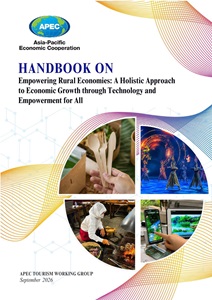
Empowering Rural Economies: A Holistic Approach to Economic Growth through Technology and Empowerment for All
The Asia-Pacific Economic Cooperation (APEC) is a regional economic forum established in 1989 to leverage the growing interdependence of the Asia-Pacific.
The Asia-Pacific Economic Cooperation (APEC) is a regional economic forum established in 1989 to leverage the growing interdependence of the Asia-Pacific.
APEC ensures that goods, services, investment and people move easily across borders. Members facilitate this trade through faster customs procedures at borders; more favorable business climates behind the border; and aligning regulations and standards across the region.
APEC ensures that goods, services, investment and people move easily across borders. Members facilitate this trade through faster customs procedures at borders; more favorable business climates behind the border; and aligning regulations and standards across the region.
APEC has helped drive economic growth and cooperation across the Asia-Pacific by reducing trade barriers, improving the ease of doing business and strengthening connectivity among economies. These efforts have contributed to rising incomes, expanded trade and greater opportunities for businesses and communities across the region.
APEC has helped drive economic growth and cooperation across the Asia-Pacific by reducing trade barriers, improving the ease of doing business and strengthening connectivity among economies. These efforts have contributed to rising incomes, expanded trade and greater opportunities for businesses and communities across the region.
APEC brings together governments, businesses and stakeholders to collaborate on shared priorities. Explore opportunities to participate in events, contribute to initiatives and engage with APEC’s work across the region.
APEC brings together governments, businesses and stakeholders to collaborate on shared priorities. Explore opportunities to participate in events, contribute to initiatives and engage with APEC’s work across the region.
Manuals
•June 2020
Download Report
4MB
Published Under
SOM Steering Committee on Economic and Technical Cooperation (SCE), Committee on Trade and Investment (CTI), Ocean and Fisheries Working Group (OFWG)
Accessed
3056
Pages
32
This publication describes everyday products that contain added mercury and that contribute to mercury releases into the environment and the ocean. The major product groups in which mercury is added intentionally are thermometers, fluorescent light bulbs, some battery types, some traditional types of electrical switches, some skin lightening creams, traditional manometers and pressure gauges. In addition, the guideline presents the requirements established in Article 4 of the Minamata Convention on the gradual elimination of the manufacture, import, use and global trade of certain products with added mercury.