

Reports
Advancing Economic Development in the APEC Region: Best Practices for Smart Human–Machine Collaboration in the Heavy Steel Construction Industry
The Asia-Pacific Economic Cooperation (APEC) is a regional economic forum established in 1989 to leverage the growing interdependence of the Asia-Pacific.
The Asia-Pacific Economic Cooperation (APEC) is a regional economic forum established in 1989 to leverage the growing interdependence of the Asia-Pacific.
APEC ensures that goods, services, investment and people move easily across borders. Members facilitate this trade through faster customs procedures at borders; more favorable business climates behind the border; and aligning regulations and standards across the region.
APEC ensures that goods, services, investment and people move easily across borders. Members facilitate this trade through faster customs procedures at borders; more favorable business climates behind the border; and aligning regulations and standards across the region.
APEC has helped drive economic growth and cooperation across the Asia-Pacific by reducing trade barriers, improving the ease of doing business and strengthening connectivity among economies. These efforts have contributed to rising incomes, expanded trade and greater opportunities for businesses and communities across the region.
APEC has helped drive economic growth and cooperation across the Asia-Pacific by reducing trade barriers, improving the ease of doing business and strengthening connectivity among economies. These efforts have contributed to rising incomes, expanded trade and greater opportunities for businesses and communities across the region.
APEC brings together governments, businesses and stakeholders to collaborate on shared priorities. Explore opportunities to participate in events, contribute to initiatives and engage with APEC’s work across the region.
APEC brings together governments, businesses and stakeholders to collaborate on shared priorities. Explore opportunities to participate in events, contribute to initiatives and engage with APEC’s work across the region.
Reports
•December 2009
Download Report
415KB
Published Under
APEC Secretariat, APEC Policy Support Unit
Accessed
77361
Pages
76
This paper aims to develop a methodology to measure APEC member economies’ progress in terms of implementing IFAP, and to identify key performance indicators that can be used to provide a consistent basis for measurement of IFAP progress over the 2008-10 period.
1 IFAP AND THE IMPORTANCE OF FDI
A. The Investment Facilitation Action Plan
B. The importance of foreign investment, and especially FDI
2 ATTRACTING FOREIGN INVESTMENT – THE LOCATION OFFER
A. IFAP and attracting investment
3 METHODOLOGY FOR MEASURING PROGRESS
A. General approach
B. What are we measuring?
C. Measuring the quality of investment-related policy
D. Absolute or relative performance?
E. Aggregating the KPIs
F. Presentation of results
4 KEY PERFORMANCE INDICATORS
A. Selecting key performance indicators
B. Summary of key performance indicators
C. Filling the gaps
5 APPLYING THE METHODOLOGY
A. Illustrative example
B. Measuring progress
6 OVERCOMING KPI GAPS THROUGH A STAKEHOLDER SURVEY
A. Survey design
B. Survey implementation
APPENDICES
A KPIs used in the illustrative example
B Stakeholder survey
Reports
Advancing Economic Development in the APEC Region: Best Practices for Smart Human–Machine Collaboration in the Heavy Steel Construction Industry
Proceedings
APEC Workshop on Shaping Digital Transformation in Accreditation
Manuals
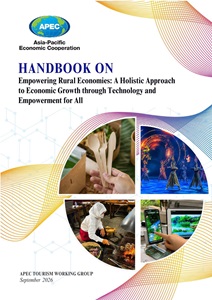
Empowering Rural Economies: A Holistic Approach to Economic Growth through Technology and Empowerment for All