

Senior Officials Push for Practical Outcomes as Economic Pressures Mount
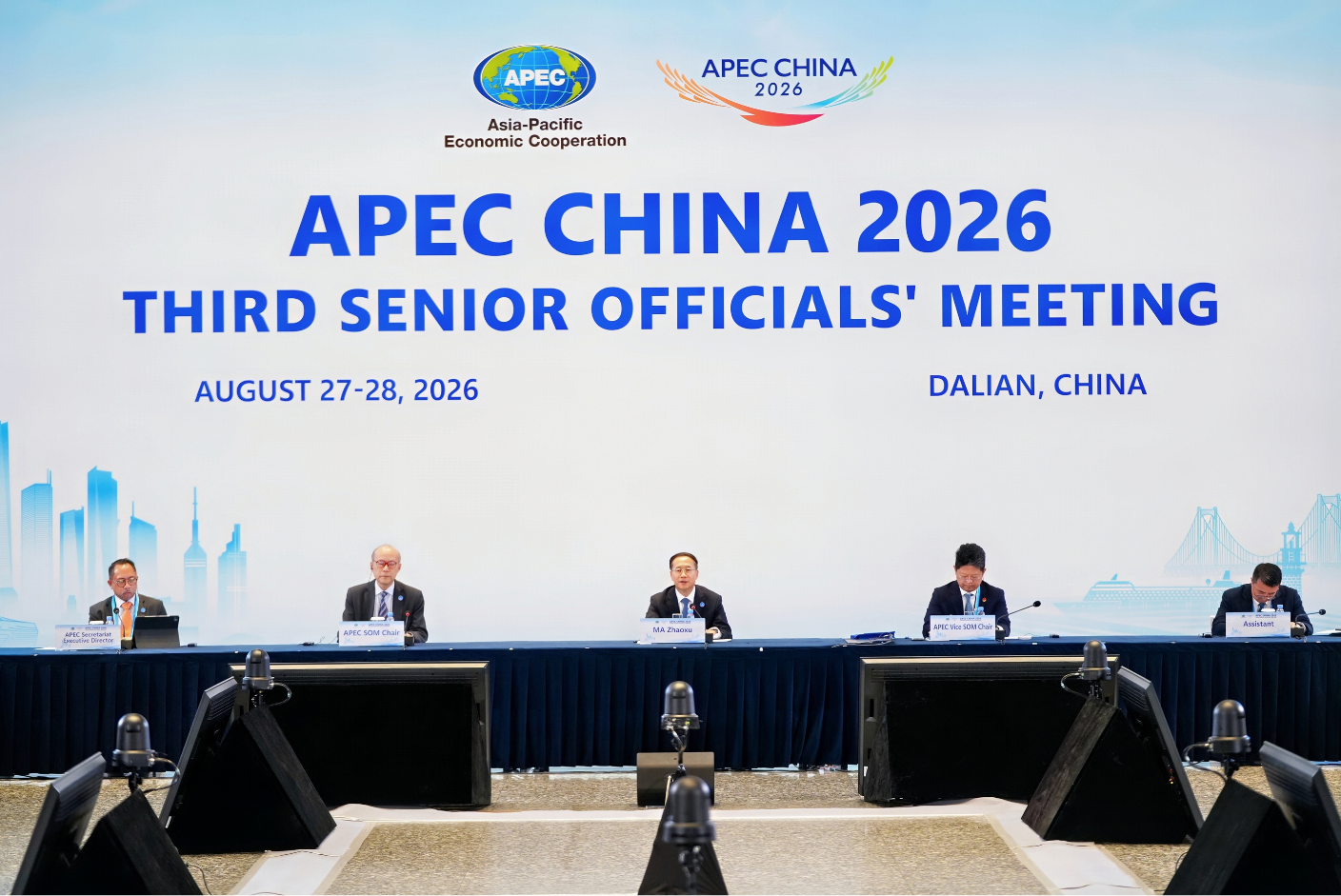
APEC senior officials concluded two days of deliberations in Dalian on Friday, advancing regional economic cooperation as trade uncertainty, geopolitical tensions and rapid technological change reshape the outlook for the Asia-Pacific.
“As an anchor of global stability and an engine of growth, the Asia-Pacific shoulders greater responsibilities,” said China’s Deputy Foreign Minister Ma Zhaoxu in his opening remarks.
China, the 2026 APEC host economy, has proposed several deliverables, including a standalone outcome on the Free Trade Area of the Asia-Pacific (FTAAP), as well as outcomes on connectivity, artificial intelligence and the digital economy.
“We should uphold the APEC spirit and make full use of the Senior Officials’ Meeting’s coordinating role,” Deputy Minister Ma said. “Through friendly consultation, we should seek common ground while respecting differences and accelerate consultations on the relevant agenda items.”
Business representatives meanwhile pressed APEC to translate regional economic cooperation into measures that reduce barriers and make it easier for companies to operate across borders.
“We have heard strong calls from the business sector to reinforce openness, including through advancing early deliverables towards the Free Trade Area of the Asia-Pacific, strengthening regional connectivity and fostering closer public-private cooperation,” said APEC 2026 Senior Officials’ Meeting Chair Ambassador Chen Xu
The APEC Business Advisory Council’s recommendations include accelerating paperless trade and interoperability, strengthening supply chain cooperation and improving access to digital infrastructure and skills. It also called for responsible, innovation-friendly approaches to artificial intelligence, particularly to broaden participation by small businesses and developing economies in the digital economy.
Senior officials also examined how APEC’s long-term agenda can keep pace with a changing regional economy through the first five-year review of the Aotearoa Plan of Action, which guides implementation of the APEC Putrajaya Vision 2040.
The review is considering how APEC’s collective actions can better address artificial intelligence, demographic change, the energy transition and cybersecurity, while continuing work on supply chain resilience, digital trade, connectivity and capacity building.
The deliberations were informed by the latest APEC Regional Trends Analysis, which forecasts regional growth of 3.2 percent in 2026, supported by technology-related trade and investment even as higher energy costs, geopolitical tensions and trade policy uncertainty weigh on the outlook.
APEC Secretariat Executive Director Eduardo Pedrosa said the next stage of work must focus on translating APEC cooperation into tangible economic impact.
“APEC is at its best when cooperation translates into practical improvements in how our economies connect, trade and respond to change,” Pedrosa concluded. “The work advanced in Dalian, from connectivity and digital transformation to stronger supply chains, must now translate into outcomes that make the region more competitive, resilient and better prepared for the changes ahead.”
For further details and media inquiries, please contact:
media@apec.org