

Ministers Push to Close Gap Between Legal and Illegal Timber Trade
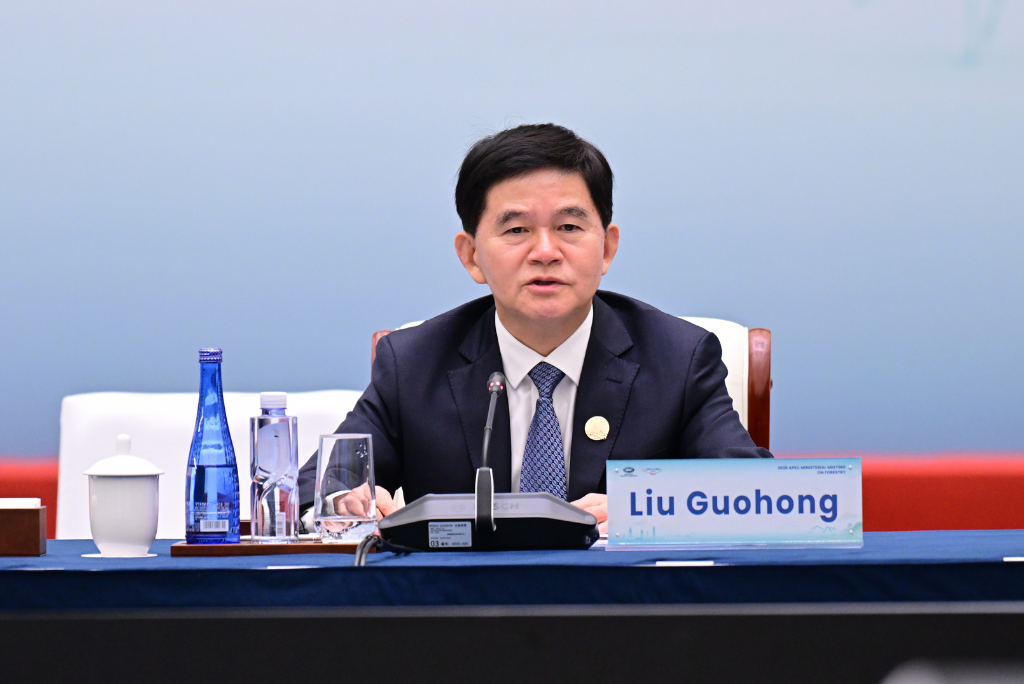
Ministers and senior representatives meeting in Shenzhen called for stronger action to protect the Asia-Pacific forests, warning that illegal logging, mangrove loss and rapid urban growth are putting one of the region’s greatest economic assets under pressure.
Convening at the sixth APEC Ministerial Meeting on Forestry on Tuesday, ministers and senior representatives focused on how digital technologies can strengthen sustainable forest management.
“We gather here today in China to renew our shared aspirations and charter the future of forest together, an occasion of great significance in the midst of global transformation,” Administrator of National Forestry and Grassland Administration of China Liu Guohong said, opening the meeting.
Illegal logging accounts for an estimated 15 to 30 percent of the global timber trade, costing the Asia-Pacific an estimated USD51 billion a year.
Senior representatives from 21 APEC economies stressed the importance of combating illegal logging and expanding legal trade, especially through wider adoption of technologies such as predictive artificial intelligence, DNA profiling and blockchain tracking, tools that help legitimate businesses prove their timber is sourced legally and build trust with buyers across the region.
The APEC Experts Group on Illegal Logging and Associated Trade is carrying this work forward by maintaining user-friendly resources like Timber Legality Guidance Template that allow businesses to quickly verify legal timber requirements as well as engaging small forestry enterprises to better understand challenges they face, among other initiatives.
Ministers also highlighted opportunities to move the forestry sector up the value chain by expanding forest products and processing, while building out services like agroforestry and eco-tourism to diversify income and build resilience for forestry-dependent economies and communities.
Home to roughly 48 percent of the world’s mangroves, the Asia-Pacific has a critical role to play in protecting them. Ministers called for faster conservation and restoration efforts, pointing to mangroves’ importance for disaster resilience, food security and economic growth.
As economies grow and cities across the region expand, ministers called for the same urgency in building environmentally friendly urban spaces, using technology and data to guide the design, protection and expansion of such spaces.
International organizations also highlighted how partnerships are translating policy into action, from the Asia-Pacific Network for Sustainable Forest Management and Rehabilitation’s long-running forest restoration projects across the Asia-Pacific to the International Mangrove Center, the world's first intergovernmental organization dedicated to mangrove conservation.
“The Asia-Pacific region, with its connected mountains and rivers, shares benefits and challenges. Let’s take this meeting as a new starting point, work hand in hand, and forge ahead together to inject greater positive momentum to the building of a clean and more beautiful Asia-Pacific,” Liu concluded.
Continuing the groundwork from today's discussions, the Experts Group on Illegal Logging and Associated Trade met on 29 and 30 July to further practical work on advancing forest resilience and the ecological well-being for all across the Asia-Pacific.
For further details and media inquiries, please contact:
media@apec.org